
There is a core principle that anyone operating in the high echelons of business and politics must memorize, or perhaps tattoo onto their conscience: “Never Outshine the Master.”
This is Rule No. 1 from Robert Greene’s essential text, The 48 Laws of Power—a required reading for entrepreneurs and politicians alike.
I learned this lesson the hard, foolish way. Early in my career, I committed a fatal error: I publicly criticized my close friend and CEO, suggesting he lacked the talent to lead and should simply remain the owner. My boss lost face. Despite our friendship and my competence, he quickly sent me on my way. My talent was no shield against that foolish indiscretion.
Since that day, I have reminded myself: Never turn your boss into a public spectacle, even if your critique is honest and intended for the greater good. Years later, when I sold my company to a new boss—a long-time friend—he met me at the Metropole Hotel and said gently, “Before, we were brothers; now, I am your boss. You report to me.” I obeyed absolutely. I made no mistake this time; I finally understood the rules of the game.
I. The American test case: The cost of impulsivity
Even in a democracy, the rule holds. Elon Musk recently demonstrated this on a grand scale: In a characteristic fit of impulsive ego, he publicly criticized Donald Trump—calling him ungrateful, lambasting his policies, and even threatening to launch a rival political party.
Musk’s impulsive dissent had a steep price tag. Just the threat of policy changes from the Trump administration could jeopardize billions of dollars in revenue for his companies, Tesla and SpaceX. Days later, Musk executed a dramatic U-turn, publicly expressing profound regret. The world’s richest man had forgotten, momentarily, that President Trump held the ultimate political power.
That was in the United States, a nation touted as a model of “democracy.”
II. The Chinese mandate: One sun, one sky
In Asia, Jack Ma offers the most classic, unforgiving example of violating the “Master Rule.”
At his peak, Ma was the undisputed symbol of China’s economic prosperity. Alibaba was valued at over $500 billion, Ant Group was preparing for a multi-hundred-billion-dollar IPO, and Ma himself was hailed globally as the “Asian Steve Jobs.”
Then he committed the unforgivable sin: At a financial forum in Shanghai, Jack Ma publicly criticized China’s banking system as “obsolete, pawnbroker-minded, and an impediment to innovation.”
Days later, the Ant Group IPO was suspended. Jack Ma vanished—no reports, no public appearances.
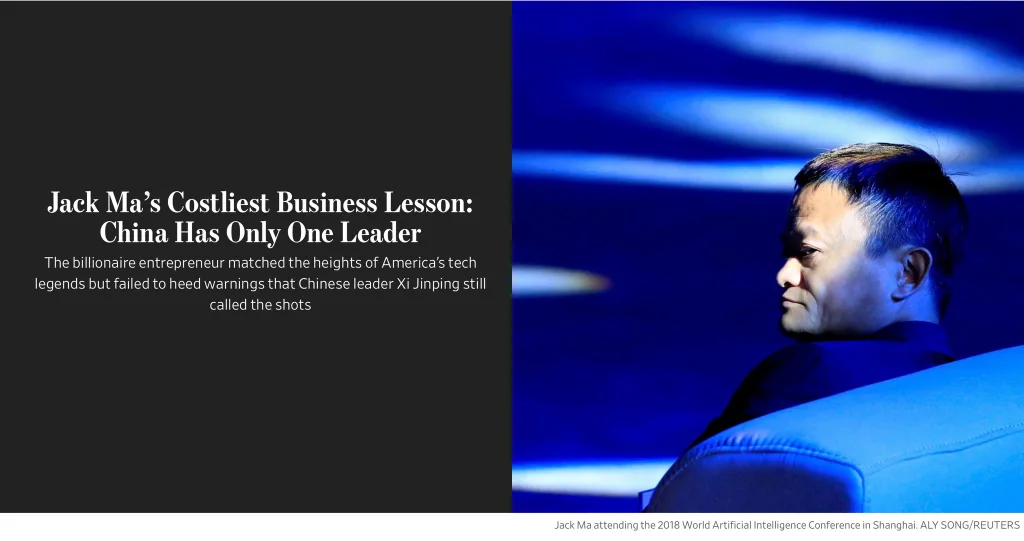
The Wall Street Journal ran the cold headline: “Jack Ma’s Costliest Business Lesson: China Has Only One Leader.”
In China, only one individual is allowed to shine absolutely: Chairman Xi Jinping. Political power always trumps money and individual prestige. Never mistake financial might for political control.
III. The Universal Law: Guns and men
If you have seen House of Cards, you will remember the scene where Frank Underwood—then Vice President—tells Raymond Tusk, a billionaire kingmaker, the ultimate truth of power: “You may have all the money, but I have the guns and men.”
The strength of the state—whether labeled democratic or autocratic—will inevitably crush the strength of money and social influence.
This rule extends even to geopolitics: Small countries live under the shadow of large ones, dependent on them economically and politically. Look at Vietnamese history: After defeating the Ming or Qing armies, Vietnamese Kings (like Lê Lợi or Quang Trung) always immediately sent emissaries to the Imperial Court to sue for peace, humbling themselves by paying tribute and offering subservient language. Our Kings understood the severe consequences of provoking the ego of the “Son of Heaven.”
IV. The corporate echo: CEO vs. Owner
The rule is just as immutable inside a corporation. The true master is the shareholder, not the CEO. A CEO, no matter how talented, must never mistake themselves for the owner. They are simply paid employees.
I once witnessed a famous Vietnamese company, valued at nearly a billion dollars at its peak, driven into ruin by its CEO. Though he owned less than 10% of the stock, his brilliance led him to believe he was the true owner. He treated the other shareholders as mere dependents, often mocking and threatening them with the company’s collapse if they did not listen to him. At first, the shareholders tolerated it. But the more they conceded, the more arrogant he became. Inevitably, the shareholders had had enough. They convened and voted him out. The CEO fought back bitterly but was finally and miserably forced out of the company he founded.
Power does not forgive delusion.
Many who operate close to power forget that the privileges and status they enjoy are not theirs by right. They are lent by the owner, the state, or the system they serve. When they attain those privileges, they become disillusioned: they forget their origins, believe they can stand alone, and arrogantly stop respecting the very system that created them.
When you outshine the master, you are not just challenging a person; you are challenging the very symbol and integrity of the entire system. No system, no owner, no sovereign—no matter how benevolent—can allow that challenge to stand.
The price of mistaking your temporary influence for absolute power is swift and total destruction.
Nguyễn Quốc Toàn
(Written out of reflection on the Elon Musk – Mr. Donald Trump affair and the ways of the world. With thanks to journalist KL for the feedback.)