
If a business knows how to utilize financial institutions and investment funds and has good advisory, it can transform very rapidly; whereas if it behaves inconsistently and unprofessionally, it can never develop.
A Different Perspective on the Ba Huan – VinaCapital Deal
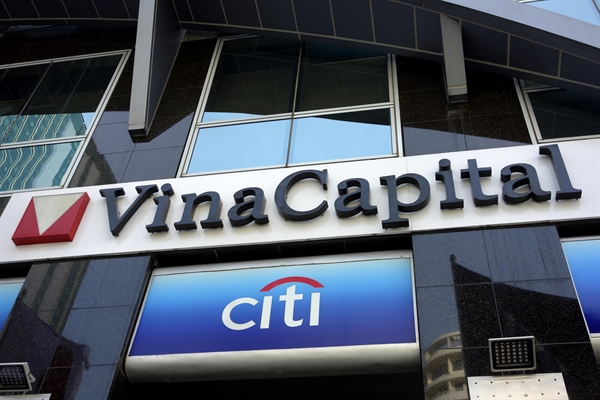
Over the past few days, information has revolved heavily around VinaCapital’s contract with the Ba Huan company being overly disadvantageous to the business owner. Through the eyes of a professional M&A advisory practitioner who has handled dozens of deals, big and small, from a few million to hundreds of millions of dollars, I think differently.
Vietnamese business owners always have the mindset that they are the master/owner, so “you put money in for me, then I take profits/bear losses.” Meanwhile, investment funds always need to have a “minimum profit guarantee.” This difference is completely understandable and reconcilable.
Business owners always want to sell their company at a high price. Investment funds often resolve the contradiction by accepting the price level provided that the business owner guarantees to achieve the corresponding profit level. And if this profit level is not achieved, the valuation must be reduced. This is a completely fair and customary clause.
If a business owner has good advice, the advisor will know how to explain to the client to bring them back to “earth” by pointing out to them that the revenue/profit figures put forward are impossible to achieve (using industry growth rates, best practices, and the readiness of the personnel apparatus). Another option is to find ways to “protect” their client in a bad scenario when the plan is not achieved (by ensuring that the business owner loses as few shares as possible).
Financial institutions and investment funds are entities using other people’s money, so they are very cautious. Shareholders and capital contributors to the fund always demand that funds be used in a planned manner. Vietnamese business owners, with the inherent nature of small and medium enterprises, often have the habit of working without a plan, even arbitrarily. The investment fund’s demand to open a co-owned bank account is also a way to require the enterprise to operate according to plan.
The requirement that the enterprise focus on a few core industries, as in the case of VinaCapital requiring Ba Huan to focus on eggs and egg-related products, is also a reasonable demand from an investment fund. Business owners often easily fall into the illusion trap that if they do one thing well, they will also do other things well. In reality, many large enterprises in Vietnam collapsed because they abandoned their main industry, abandoned their core competence, and jumped into following trends.
Speaking of hostile takeovers, having worked with many investment funds, I can say that except for buyout funds, very few investment funds want to control a company and sideline the owner/founder. Simply because they do not have high expertise or operational experience in the industry in which they invest. They invest in companies because there is an experienced founding owner, and they trust that with the capital they provide, the business owner will develop the company much more.
Only in “last resort, involuntary” cases when the company does not develop as expected does the investment fund have to seize control of the enterprise. This is extremely costly and laborious, and at the same time carries a lot of risk for the fund because they then have to recruit people to work in that industry, learn from scratch, and build the apparatus for the company. I do not think an investment fund like VinaCapital, with so many other investments, would want to control an enterprise they have invested in for less than 6 months.
The “Second-Class Shareholder” Position and the Matter of Trust
In reality, the mentality of fearing takeovers stems from the mindset of regarding investment funds as “second-class shareholders,” which is a worrying thing in the relationship between founders and investment funds.
Not a few business owners believe that they are the most important and that institutional shareholders are merely “freeloaders.” They forget that when there are new investors, the game is no longer a one-man show but belongs to many people: you contribute effort, I contribute capital. Both sides are then equal in shareholder relations, and no one owes anyone a debt of gratitude. One common share of a founder or a fund carries the exact same full value.
Therefore, the viewpoint regarding an investment fund as a “second-class shareholder” that must “feel indebted” or “run after” the business owner is unprofessional.
Because they view institutional shareholders as “enemies on the other side of the battle line,” instead of moving forward in consensus, business owners are ready to do everything possible to diminish the role of major investors by withdrawing money, establishing backdoor companies, and seeking every trick to dilute the major investor’s shares, even thinking of ways to force the major investor/institution to sell back to them by driving profits down or transfer pricing to another company.
Some business owners even strangle their own company with their own hands by letting the company suffer perpetual losses or “holding the company hostage” against investors by continuously threatening to set up a new company, take technology and contracts elsewhere, or blocking and refusing to share information when institutional investors want to sell back.
Investment funds have a short lifespan, from 5 to 7 years; they cannot bear perpetual losses, so at times they bitterly have to sell with very little profit or heavy losses.
Those business owners have forgotten that when the company was in dire straits or at the early stage of growth, who trusted and gave them money so that they could spring up to dominate the market. They do not remember that it was partly thanks to the prestige of institutional shareholders that the name of the company they founded became known, more respected, more reputable, and thus developed further.
In the past, a few such companies could survive and could still work with other investors. But today, trust is something extremely important, of vital significance to an enterprise. Companies with business owners behaving like that will be penalized immediately. If it is a listed company, their stock will plummet in value because institutional shareholders will gradually sell off. And if it is an unlisted company, you will hardly have the chance to find investors for your bigger game.
In my advisory career, I have had no small number of such bitter and painful experiences. There was a company invested in by powerful financial empires in the world, but they did not cherish those organizations, did not abide by initial commitments, and in the end, that investment organization had to sell off and bear heavy losses. Later on, no investment fund wanted to meddle with that company anymore. The company still forever failed to reach the development potential that the owners had once envisioned.
M&A Lessons
Do you ask yourself why Masan is always able to raise capital well? Because no institutional investor investing in Masan has ever lost money. Why are major financial institutions ready to pour billions of dollars into Vingroup? Because this group always grows, has a professional leadership team, and always respects investors.
Meanwhile, there are companies that sound large in market capitalization, but the business owner alone dominates and owns 80–90%. Why? Because no one hangs out with them anymore. The company’s market capitalization can reach hundreds of millions of dollars, but in reality, it is just a stack of scrap paper manipulated among a few internal shareholders. When institutional shareholders conflict with the management board, the stock can drop by half even though the company leads the market.
There are also companies whose P/E ratio is very high yet attract a lot of interest from investors because they are transparent and build trust with institutional and individual investors.
Returning to the story of cooperation between business owners and investment institutions, the role of advisory is indispensable. In developed countries, an M&A or investment deal always involves financial advisors and lawyers. In Vietnam, many business owners are often overly confident in themselves or overly stingy. Having built a successful business, they feel confident they can deal successfully with financial institutions on their own.
A private equity or M&A transaction is very complex and contains many clauses that must be negotiated in great detail and rigor. The financial advisor is the person who presents commercial terms, company valuation, hypothetical scenarios, and builds a business plan that closely aligns with reality.
They also model the business scenarios of the enterprise, flesh out the investment ideas of the enterprise, and negotiate terms regarding the relationship between the business owner and the investor. For example, how exit strategies work, what the remuneration scheme for the business owner looks like when new shareholders arrive, and how disputes are resolved when they arise.
Meanwhile, the lawyer is the person who drafts those terms into written documents and works alongside the financial advisor to legalise the negotiated terms.
An advisor who is not competent will “be breaking into a cold sweat” because the owner makes “empty promises” about unachievable terms. There are times when the owner “aims for pie in the sky” with the investment fund without knowing the consequences of doing so. There are times when the advisor has to accept being the “untrustworthy” party and “take the blow,” or in other words, be the “villain” on behalf of the business owner during negotiations to protect their interests…
In a global economy with the 4.0 revolution imminent, no enterprise can take off and become powerful without participating in the capital market and financial market. Enterprises must learn to work and behave with investment funds and advisors in a professional and legally compliant manner.
Receiving advisory means receiving the accumulated brainpower of hundreds and thousands of deals, not just receiving “spittle.” Receiving investment money means having someone share the burden of debt with you and making the game significantly larger, not submitting to takeover.
The capital of investment funds is non-refundable capital and is much safer than bank loan money. Loan money must be repaid sooner or later, whereas investment money belongs to shareholders. Only when a company finds the optimal balance between loan money and investment money can that company possess good financial health and develop in the long term.
If an enterprise knows how to utilize financial institutions and investment funds and has good advisory, it can transform very rapidly within a few years. But if it continues to behave inconsistently and unprofessionally, then with the ever-increasing development and transparency of the financial, media, and legal markets, those owners and their companies will forever remain in the “village pond,” clutching regret over old golden days.
Nguyen Quoc Toan